Grassroots / Academy
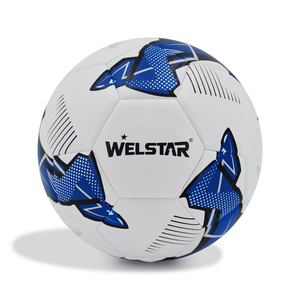
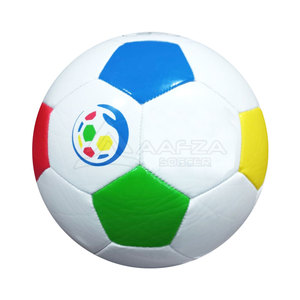
Welstar Custom Printing PVC Soft Training Football (Sizes 3, 4, 5)
3.2mm Soft PVC Shell | SR Rubber Bladder | Multi-Layer Backing
 CedarExSports Global
 Engineered for high-frequency drills, synthetic pitch friction, and intense desert climate durability across Saudi Arabian sports facilities.
Under the ambitious directives of Saudi Vision 2030, the Kingdom of Saudi Arabia (KSA) is undergoing an unprecedented sports sector transformation. Driven by massive investments from the Ministry of Sports, the privatization of Saudi Pro League (SPL) clubs, and the explosive growth of youth sports academies such as the Mahd Sports Academy, the domestic demand for commercial-grade, high-durability training equipment has surged exponentially. Commercial procurement officers, municipal buyers, private academy directors, and sports equipment distributors are no longer searching merely for basic sports balls; they require specialized, climate-resilient training footballs engineered to withstand the unique environmental and physical stressors of Middle Eastern athletic facilities.
Procuring sports gear for the Saudi market presents distinct engineering challenges. Training footballs deployed in regions like Riyadh, Jeddah, Dammam, and Medina must operate reliably across extreme temperature fluctuations—where synthetic pitch surface temperatures routinely exceed 55°C (131°F) during summer afternoon sessions. Conventional entry-level PVC or poorly laminated PU balls suffer from accelerated thermal degradation, seam separation, air pressure loss, and bladder deformation under these conditions. Consequently, international manufacturers serving the Saudi market must combine advanced polymer science, heat-resistant adhesive laminations, and strict regulatory compliance (including SASO and SABER portal clearances) to deliver true long-term value.
E-E-A-T Sourcing Insight: Training footballs intended for Saudi Arabia synthetic turf pitches require high-density Cross-Linked Polyethylene (XLPE) inner foam backings combined with dynamic Butyl or Taiwan-imported Synthetic Rubber (SR) bladders. This structural configuration mitigates heat expansion and maintains strict sphericity and bounce consistency across 10,000+ impact cycles.
To provide clear Information Gain for procurement managers evaluating factory OEM spec sheets, we must analyze how raw material selection directly impacts product lifespan on Saudi pitches. Pitch surfaces in KSA predominantly range from 3G/4G rubber-granule infill artificial turfs in urban academies to natural hybrid pitches in professional stadiums, and hardcourt indoor surfaces for futsal and mini-football.
Eliminates needle holes and thread exposure entirely. Panels are fused using thermo-activated polyurethane adhesives under high-pressure moulds, resulting in zero water absorption during pitch washing and superior aerodynamic stability.
Utilizing high-tensile 5-ply wax-treated polyester thread combined with deep seam sealing. Preferred by traditional academies for its repairability, soft touch, and high mechanical stress resistance on natural grass.
Specially treated Polyurethane (PU) outer skins containing anti-yellowing and anti-cracking UV blockers prevent skin brittleing caused by direct solar radiation in desert climates.
| Polymer Type | Surface Heat Resistance (Max °C) | Abrasion Resistance (Turf) | Rebound Stability | Recommended KSA Application |
|---|---|---|---|---|
| Japanese PU (1.2mm - 1.5mm) | up to 60°C | Extreme (High Density) | FIFA Quality Pro Level | Pro League Academies & Match Training |
| Standard Korean PU (1.0mm) | up to 50°C | High | FIFA Basic / Training Level | Commercial Club & School Training |
| High-Grade TPU (Soft Touch) | up to 45°C | Moderate to High | Consistent | Grassroots Youth (Size 3 & 4) |
| Standard PVC Cover | up to 38°C (Risk of hardening) | Moderate | Variable | Promotional & Recreational Supply |
Supply chain logistics and product specs must align with the specific operational environment within the diverse regions of the Kingdom:
Training facilities in Riyadh experience sharp temperature swings between day and night, alongside extreme dry heat during summer months. Footballs deployed in these regions require low-permeability butyl bladders to prevent overnight deflation caused by ambient pressure shifts. Multi-layer cross-laminated polyester-cotton backings maintain structural integrity when thermal expansion exerts outward force against the outer panel seams.
Coastal sports complexes in Jeddah, Yanbu, and King Abdullah Economic City (KAEC) are subject to high relative humidity and atmospheric salinity. Metal valves and low-grade stitching thread deteriorate rapidly in these micro-climates. OEM training footballs built for coastal supply feature self-sealing brass/silicone valve cartridges and 100% synthetic rot-proof polyester thread sealed with waterproof seam coats.
Home to major corporate sports leagues (such as Saudi Aramco community clubs and industrial sports complexes), the Eastern Province demands high-volume, heavy-duty training footballs capable of continuous usage across artificial turf. Here, machine-stitched TPU balls with reinforced EVA foam cushioning provide the ideal balance between budget efficiency and surface abrasion resistance.
Importing sports goods into Saudi Arabia requires adherence to national technical regulations enforced by the Saudi Standards, Metrology and Quality Organization (SASO). B2B buyers must partner with manufacturers whose production facilities hold international quality audits and can provide necessary technical documentation for smooth clearance via the SABER e-platform.
Every shipment of footballs requires a Product Certificate of Conformity (PCoC) registered on SABER, followed by a Shipment Certificate (SCoC) prior to vessel departure from port of origin.
In accordance with SASO safety standards, PVC and PU football covers must pass chemical testing verifying compliance with non-toxic plasticizer limits (EN 71-3 / REACH standards).
Efficient shipping routes connect major manufacturing hubs directly to Jeddah Islamic Port and King Abdulaziz Port (Dammam), with transit times averaging 18-24 days by sea freight.
As a global OEM sports equipment manufacturer operating accredited production facilities in Sialkot, Pakistan—the international capital of hand-stitched and thermobonded sports ball manufacturing—our enterprise supply infrastructure provides unmatched reliability for Saudi importers:
Our audited facilities operate under strict ISO 9001:2015 quality management systems, alongside social compliance credentials including SEDEX/SMETA, WRAP, and amfori BSCI. By pairing generational craftsmanship with automated CNC panel cutting, automated adhesive spraying, and electronic sphericity checking, every batch of training footballs meets international FIFA Quality Programme tolerance benchmarks.
Whether you are supplying municipal sports projects in Riyadh, equipping private academies across the Western Province, or establishing a regional sports retail brand in the GCC, our engineering desk is ready to assist your procurement team.