


Executive Summary: The Evolving B2B Procurement Landscape for Goal Nets & Sports Hardware
In the modern commercial sports equipment ecosystem, selecting a reliable China Wholesale Goal Nets Factory & Exporter requires far more than comparing basic unit prices. Modern procurement directors, municipal buyers, global sports brand managers, and tournament organizers face compounding market demands: rigorous mechanical stability, strict compliance with international safety guidelines (such as FIFA, UEFA, and EN 748 standards), long-term UV resistance, and verifiable ESG (Environmental, Social, and Governance) traceability.
As a leading manufacturing partner headquartered with extensive export capabilities across Europe, North America, the Middle East, and Latin America, our production infrastructure bridges centuries-old textile craftsmanship with modern polymer extrusion technology. This comprehensive whitepaper provides B2B buyers with actionable intelligence regarding polymer raw material selection, knotless vs. knotted netting geometry, impact absorption metrics, and supply chain strategies for 2026 and beyond.
Technical Deep-Dive: Material Science & Tensile Engineering
The structural integrity of a professional goal net is directly governed by its raw material formulation, filament orientation, and manufacturing weave. Understanding these technical parameters ensures optimal procurement decisions tailored to facility type, weather exposure, and impact intensity.
HDPE vs Polypropylene (PP)
High-Density Polyethylene (HDPE) features zero water absorption (<0.01%), rendering it impervious to rot, mildew, and freeze-thaw cracking. Braided Polypropylene (PP) offers higher elasticity and visual mass, ideal for professional stadium depth nets where quiet ball dissipation is required.
UV Stabilization (HALS Tech)
Our goal nets incorporate 2.5% active Hindered Amine Light Stabilizers (HALS) into the masterbatch during extrusion. This blocks UV-A and UV-B photolytic degradation, allowing nets to withstand over 1,200 hours of accelerated QUV weatherometer testing with >90% tensile retention.
Knotless vs. Knotted Weave
Knotless netting produced on Raschel warp knitting looms eliminates high-friction wear points at mesh intersections. This increases energy dispersion efficiency across adjacent meshes, preserving high breaking strength (ISO 1806) while presenting a clean, modern aesthetic.
Material Specification Matrix: Goal Nets Engineering Standards
To assist technical buyers in drafting RFP specifications, the following comparison matrix details parameters across our primary commercial goal net product lines:
| Specification Grade | Twine Thickness | Raw Material | Breaking Strength (ISO 1806) | UV Rating (QUV Test) | Recommended Application |
|---|---|---|---|---|---|
| Stadium Hexagonal | 4.0mm - 5.0mm Braided | High-Tenacity PP / HDPE | > 2,100 N | 1,500 Hours (UV-850) | FIFA / UEFA League Arenas |
| Commercial Club Standard | 3.0mm - 4.0mm Twisted | Virgin HDPE (100%) | > 1,600 N | 1,200 Hours (UV-600) | School & Training Facilities |
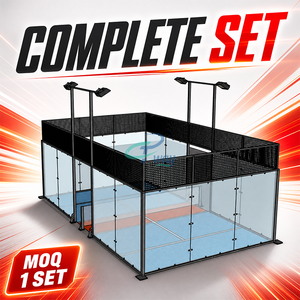
| Portable Cage / Padbol | 2.5mm - 3.0mm Knotless | Nylon 6 / High-Flex PP | > 1,350 N | 1,000 Hours (UV-500) | Indoor / Cage Soccer Courts |
| Youth & Heavy Duty Training | 2.0mm - 2.5mm Twisted | Polyethylene Composite | > 950 N | 800 Hours (UV-400) | Academy & Recreational Use |
2026–2030 Global Sourcing Trends: Smart Netting & Sustainable Polymers
As the international sports industry accelerates toward carbon neutrality and smart venue infrastructure, goal net manufacturing is undergoing significant technological pivots. Global buyers who integrate these future trends into their purchasing strategies will gain distinct competitive advantages:
1. Bio-based & Recycled Ocean Plastics (GRS Certified)
Environmental regulations across the EU and North America are prompting sports federations to mandate recycled content. Our factory is at the forefront of this transition, utilizing Global Recycled Standard (GRS) certified polyethylene recovered from post-industrial maritime ropes and recycled bottle flakes (rPET). These materials maintain 96% of the tensile strength of virgin polymers while lowering carbon footprint per net by up to 38%.
2. Micro-Sensor & Camera Mounting Net Interlocking
With VAR (Video Assistant Referee) and automated sports analytics becoming standard in sub-elite leagues, net geometry must accommodate high-definition cameras without sag or visual distortion. Our hexagonal structural nets feature reinforced depth ropes and vibration-dampening top border bands designed specifically for integrated optical sensor calibration.
3. Complete OEM Integration: Footballs, Training Gear & Netting
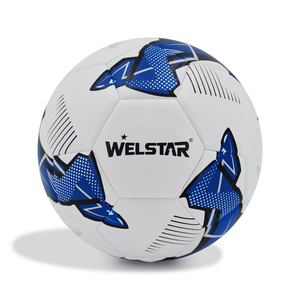
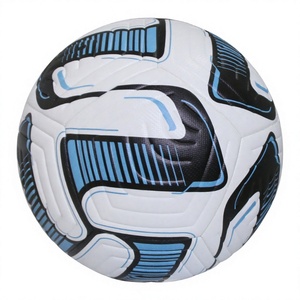
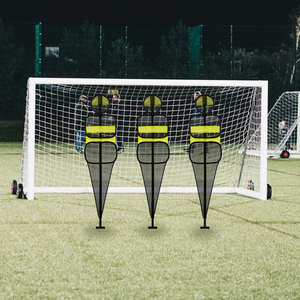
Modern sports equipment distributors increasingly seek "one-stop supply chain consolidation." Rather than sourcing match footballs, agility dummies, court netting, and rugby gear from fragmented suppliers, consolidated shipments significantly reduce freight overhead, customs clearance complexity, and container void space.