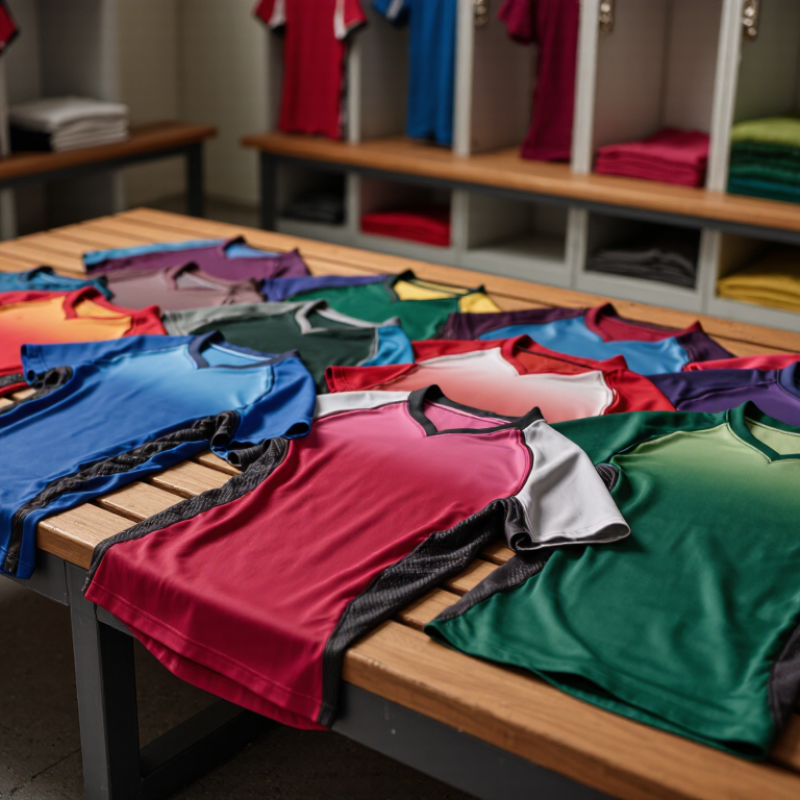
When a team steps onto the field, its uniform communicates more than a logo. It reflects preparation, shared identity, and practical confidence. Sublimated Sports Jerseys offer a detailed way to build that impression. Instead of adding heavy layers afterward, manufacturers transfer artwork into the fabric fibers. This process can create sharp names, numbers, gradients, and sponsor-ready designs. The result feels personal. It also looks consistent.
From experience, teams notice the difference during long practices. A lightweight jersey can dry faster than many traditionally decorated options. Smooth surfaces may reduce the rough feeling caused by raised lettering or peeling patches. Coaches can inspect every shirt before competition. They can check number placement, sleeve balance, and color accuracy. Reliable suppliers should provide size charts, digital proofs, fabric specifications, and clear production timelines. These details support informed decisions, not hopeful guesses. A jersey should fit an athlete, not only a design screen.
However, sublimation is not perfect for every team. Very small text may lose clarity. Poor artwork preparation can weaken the final appearance. Light fabrics also require careful color planning under bright stadium lights. Budget, sport, climate, and washing habits deserve honest discussion. That reflection matters. The strongest choice balances visual quality with comfort, durability, and responsible production. When these factors align, a well-planned jersey helps athletes feel recognized before the first whistle.
Fiber Selection: Polyester Was 54% of Global Fiber Output in 2022 (TE)
Why Choose Sublimated Sports Jerseys for Your Team?
When teams compare jersey fabrics, polyester deserves careful attention. Textile Exchange reported that polyester represented 54% of global fiber production in 2022. This share reflects its widespread use, not automatic sustainability. Polyester offers stable sizing, quick drying, and consistent color performance. These properties suit uniforms that face repeated training sessions and frequent washing.
Sublimation works especially well with polyester. Heat transfers the design into the fabric fibers. The numbers and patterns do not sit as a thick surface layer. Players can bend, stretch, and slide without feeling a heavy print. Detailed artwork also remains visible across the chest and sleeves. A practical fabric check should include breathability, fabric weight, and seam strength. A jersey that looks sharp but traps heat will disappoint during a long match.
The choice is not perfect. Polyester is fossil-fuel based, and ordinary washing can release tiny fibers. Recycled polyester may reduce reliance on new raw materials, but it does not solve every environmental concern. Teams should request clear fiber information and test samples before ordering. Check color accuracy under outdoor light. Check shrinkage after washing. Small oversights become expensive mistakes. Still, sublimated polyester can provide durable teamwear when performance needs and material impacts receive equal attention.
Why Choose Sublimated Sports Jerseys for Your Team? - Fiber Selection: Polyester Was 54% of Global Fiber Output in 2022 (TE)
| Data Dimension |
Polyester for Sublimated Jerseys |
Why It Matters for Teams |
| Share of global fiber output |
54% in 2022 |
Polyester is a widely used fiber with an established supply chain for sportswear production. |
| Sublimation compatibility |
Excellent on white or light-colored polyester fabrics; dye becomes part of the fiber surface during heat transfer. |
Supports detailed graphics, gradients, numbers, names, and full-coverage designs without heavy surface layers. |
| Typical moisture regain |
Approximately 0.4% under standard atmospheric conditions |
Low moisture absorption helps the fabric dry quickly during training and competition. |
| Fiber density |
Approximately 1.38 g/cm³ |
Allows lightweight jersey constructions while maintaining useful fabric strength. |
| Common jersey fabric weight |
Approximately 120–180 g/m² for many lightweight team jerseys |
Provides a practical balance between breathability, coverage, durability, and player comfort. |
| Color and design flexibility |
Suitable for continuous-tone digital graphics and multi-color layouts |
Teams can create coordinated home, away, training, and special-event designs with consistent visual detail. |
| Abrasion and repeated-use performance |
Generally good resistance to abrasion and repeated laundering when properly constructed and cared for |
Helps jerseys remain serviceable across regular practices, matches, and seasonal use. |
| Care requirement |
Machine wash according to the garment label; avoid excessive heat and chlorine bleach |
Appropriate care helps preserve fabric performance, print appearance, and garment shape. |
Data note: The 54% figure refers to polyester’s share of global fiber production in 2022. Other values are typical industry or textile-property ranges and may vary according to yarn type, knit structure, fabric finish, garment construction, and test conditions.
Sublimation Process: 180–210°C Heat Bonds Dye to Polyester Fibers
Why Choose Sublimated Sports Jerseys for Your Team?
Sublimation uses controlled heat, usually 180–210°C, to bond dye with polyester fibers. The ink becomes gas and enters the fabric surface. It does not sit as a thick layer. This keeps jerseys light, flexible, and breathable during repeated movement. A sharp team number can remain part of the fabric, rather than peeling like a surface print. That detail matters.
The 2024 Textile Exchange Materials Market Report estimates global fiber production reached 124 million metric tons in 2023. Polyester represented about 57% of that volume, showing its strong industrial availability. Polyester also accepts sublimation efficiently because its structure responds well to heat and dispersed dyes. In practical production, technicians must control temperature, pressure, and dwell time. Small errors can create blurred edges, pale areas, or uneven color.
Grand View Research forecasts the global sports apparel market to expand at about 6.9% annually from 2024 to 2030. Custom teamwear is part of this wider demand for identity and performance. Still, sublimation is not perfect. It works best on white or light polyester fabrics, while deep base colors need different methods. I have seen attractive artwork lose clarity when files use very thin lines. Testing one sample before a full order remains the safer choice.
Performance Testing: Use AATCC TM195 Moisture-Management Metrics
Why Choose Sublimated Sports Jerseys for Your Team?
Sublimated sports jerseys can deliver sharp graphics without heavy surface layers. The design becomes part of the fabric, helping the jersey stay light during intense play. Yet appearance alone does not prove comfort. A proper performance check should include AATCC TM195 moisture-management metrics. This method measures wetting time, absorption rate, spreading speed, and liquid movement through the fabric. It can also report one-way transport and overall moisture-management capacity.
Tips: Test fabric samples before ordering full uniforms. Compare results after washing. A jersey that performs well when new may feel different later. Record the test conditions, fabric weight, and finishing details. Small differences matter.
In practical testing, a strong jersey should move sweat away from the skin quickly. A wider spreading radius may support faster evaporation across the surface. Good one-way transport can reduce the damp feeling against the body. Still, no single number tells the whole story. We have seen lightweight materials score well but feel less comfortable in humid weather. That result deserves a second look. Combine TM195 data with field trials, repeated washing, and player feedback. Check the collar, seams, and lower back area, where heat often builds. Reliable teams choose evidence over attractive samples.
Durability Testing: Evaluate Colorfastness Through ISO 6330 Wash Cycles
Why Choose Sublimated Sports Jerseys for Your Team?
Sublimation bonds printed color into polyester fibers instead of placing ink on the surface. This structure reduces peeling, cracking, and heavy surface friction during training. Textile Exchange’s 2024 Materials Market Report estimated global fiber production at 124 million tonnes in 2023. Polyester represented about 57% of that volume, supporting its strong role in performance apparel.
Colorfastness still requires evidence. ISO 6330:2021 defines domestic washing and drying procedures for textile testing. It does not independently declare a jersey colorfast. A reliable assessment should combine repeated ISO 6330 wash cycles with visual grading under ISO 105-A02. Many testing plans use 5, 10, or 20 cycles. Record the water temperature, detergent, drying method, and fabric condition each time. Small details matter.
Inspect the chest numbers, sleeve edges, and darker panels first. These areas often reveal uneven fading or color migration. Compare each specimen with an unwashed control under consistent lighting. A 2023 industry report from the International Textile Manufacturers Federation recorded continued pressure for longer-lasting textile products and improved resource efficiency. Longer color life can reduce replacement demand, but testing should remain honest. One sample is not enough. Real match use includes sweat, sunlight, abrasion, and rushed washing. That is where laboratory confidence can become less certain.
Why Choose Sublimated Sports Jerseys for Your Team?
Durability testing evaluates colorfastness through ISO 6330 domestic wash cycles. This normalized color-retention index compares a sublimated polyester jersey with a screen-printed jersey across repeated washes.
The sample test data shows sublimated color remaining more stable because the dye is embedded into the polyester fibers, while surface-applied decoration typically loses more color as wash cycles increase. Higher values indicate better color retention.
Team Economics: Compare Minimum Orders, Lead Times, and Cost per Wear
Why Choose Sublimated Sports Jerseys for Your Team?
Team economics often matter more than the first quoted price. Sublimated jerseys usually offer flexible minimum orders, which helps smaller teams avoid excess inventory. A ten-player roster may need only twelve shirts, including two spares. However, minimums differ between suppliers, so confirm them in writing. Ask whether replacements can be ordered individually later.
Lead time also affects your budget. Standard production may take several weeks, while peak-season orders can take longer. Build in time for artwork approval, size checks, production, and shipping. A delayed shipment can force expensive local purchases. Request a written timeline, not a verbal promise. I have seen teams approve designs quickly, then lose days correcting missing player numbers.
Tips: Compare the full delivered cost, not only the unit price. Divide the price by expected wears. A 40-dollar jersey worn twenty times costs 2 dollars per wear. A cheaper shirt worn five times costs more in practice. Check fabric durability, color consistency, washing instructions, and replacement pricing. Keep one approved sample for future comparison.
Sublimation can reduce long-term costs because designs become part of the fabric. Names and numbers do not sit on top as separate layers. This may reduce peeling and maintenance concerns. Still, performance depends on fabric weight, stitching, and quality control. Order a sample when possible. It may reveal sizing issues before the full order, although sample fees can slightly increase the initial budget.
Conclusion
Sublimated Sports Jerseys offer teams a practical combination of performance, customization, and long-term value. Polyester is a strong fabric choice because it represented 54% of global fiber output in 2022, providing a durable, lightweight surface for vivid designs. During sublimation, controlled heat of approximately 180–210°C bonds dye directly into the polyester fibers, helping graphics remain smooth, breathable, and resistant to peeling.
A reliable evaluation should include moisture-management testing using AATCC TM195 metrics to assess how effectively the jersey moves sweat away from the body. Durability can be reviewed through colorfastness testing and ISO 6330 wash cycles. Teams should also compare minimum order quantities, production lead times, and cost per wear. Looking beyond the initial price makes it easier to select jerseys that deliver consistent comfort, appearance, and value throughout repeated practices, games, and seasons.
 CedarExSports Global