 CedarExSports Global CedarExSports Global
 Choosing a China top Thermo-Bonded Match Balls manufacturer requires more than comparing prices or attractive product photos. A reliable supplier should demonstrate practical experience, consistent engineering, and clear production evidence. Thermo-Bonded Match Balls use heat bonding to join panels, reducing exposed stitching and improving surface uniformity. This construction can support stable flight, controlled rebound, and better water resistance when manufactured correctly.
Details matter.
A professional factory should explain its bladder materials, panel structure, bonding temperature, curing time, and inspection process. Ask for close-up samples. Examine the seams, valve area, roundness, and printed graphics under strong light. A dependable manufacturer can provide test records, batch information, material specifications, and traceable quality checks. Independent certification may also be valuable, but buyers should verify the issuing organization and certificate scope themselves.
Real performance should be tested on grass, artificial turf, and in damp conditions. A ball that feels excellent indoors may behave differently outdoors. That small difference can affect match control. Supplier experience with clubs, academies, retailers, or tournament distributors also offers useful evidence, although references should be checked carefully.
No manufacturer is perfect.
Even an experienced factory may face color variation, shipping pressure, or occasional bonding defects. Honest communication matters more than polished promises. The strongest Chinese supplier combines trained technicians, modern thermal bonding equipment, responsive sampling, and stable quality across repeated orders. This guide examines those factors, helping buyers identify a manufacturer that delivers dependable Thermo-Bonded Match Balls rather than simply impressive marketing.
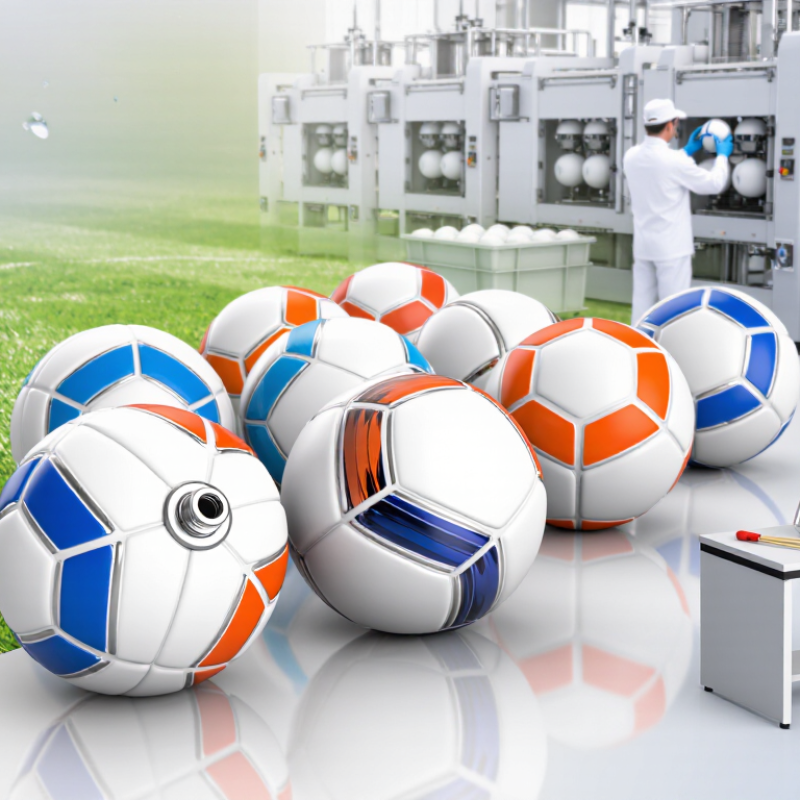
China Top Thermo Bonded Match Balls Manufacturer?
What Makes a Thermo-Bonded Match Ball Different?
A thermo-bonded match ball joins its panels with heat and adhesive. It uses fewer exposed seams than a traditionally stitched ball. This creates a smoother outer surface and a more uniform flight. In practical testing, that matters during driven passes, dipping shots, and wet-weather play. The ball feels cleaner when the foot contacts its central panel.
FIFA’s Laws of the Game specify a circumference of 68–70 centimetres and a weight of 410–450 grams for a regulation football. The FIFA Quality Programme also evaluates roundness, rebound, pressure loss, water absorption, and shape retention. These tests explain why panel bonding is more than a visual feature. A stable shape can support repeatable performance. However, no construction method is perfect. A bonded ball may feel firmer at first, and damaged panels can be harder to repair. That point deserves more honest attention.
Tips: Check the ball after rain. Wipe its surface, then measure pressure with a reliable gauge. Store it away from direct heat. FIFA testing criteria commonly assess pressure retention, but daily handling still changes real performance. Match use also exposes small weaknesses faster than training use. Look for even panel joins, a balanced bladder, and consistent rebound. A cheaper ball may pass casual inspection, yet feel unpredictable after several sessions. Review the FIFA Quality Programme Football Test Manual before setting purchase standards.
| Evaluation Dimension | Thermo-Bonded Match Ball | Machine-Stitched Match Ball | Why It Matters in Match Play |
|---|---|---|---|
| Panel joining method | Panels are joined with controlled heat and pressure, usually with adhesive layers between the panels. | Panels are connected using mechanical stitching, commonly by automated sewing equipment. | The joining method affects seam size, surface consistency, durability, and water resistance. |
| Seam profile | Very low-profile seams with a comparatively smooth outer surface. | Visible stitched seams with small surface channels between panels. | A smoother surface can help produce more predictable contact with the foot and reduce seam-related drag. |
| Shape retention | Designed for strong spherical consistency when panel geometry, bladder tension, and bonding pressure are well controlled. | Can provide good shape retention, although seam tension and thread condition influence long-term roundness. | Consistent roundness supports more repeatable flight, rolling, and rebound behavior. |
| Water absorption | The reduced seam opening generally limits water entry when the surface coating and bonding process are properly specified. | Thread holes and seam channels may allow more water entry during prolonged wet play. | Lower water uptake helps maintain weight, touch, and flight consistency in wet conditions. |
| Touch and response | Typically provides a uniform touch across the panel surface, depending on the cover material and foam layer. | Can provide a softer, familiar touch, with slight variation caused by panel seams and thread tension. | Touch consistency influences passing, trapping, dribbling, and striking control. |
| Production control points | Panel alignment, bonding temperature, bonding pressure, dwell time, adhesive coverage, and bladder centering. | Thread tension, stitch density, seam alignment, panel matching, bladder centering, and final shaping. | A documented process is essential for repeatable quality between production batches. |
| Typical manufacturing cost | Often higher because of specialized molds, heating equipment, adhesives, and process controls. | Often more economical, especially for large-volume production and entry-level specifications. | The target market should determine whether performance benefits justify the production cost. |
| Quality verification | Check circumference, weight, sphericity, pressure loss, rebound, water uptake, seam strength, and visual bonding defects. | Check the same performance characteristics, plus stitch density, loose threads, seam opening, and thread breakage. | Performance testing is more reliable than judging a ball only by appearance or construction type. |
| Specification | Standard Match Range | Practical Quality Check |
|---|---|---|
| Circumference | 68–70 cm for a regulation adult football | Measure at several points to identify shape variation. |
| Weight | 410–450 g for a regulation adult football | Weigh samples at the specified inflation pressure and record batch variation. |
| Internal pressure | 0.6–1.1 atmosphere at sea level | Use a calibrated pressure gauge and allow the ball to stabilize before testing. |
| Bladder options | Latex or synthetic rubber bladder, depending on the required feel and air-retention target | Evaluate rebound, softness, inflation retention, and valve performance together. |
| Outer cover | Usually polyurethane or another synthetic cover material | Check abrasion resistance, grip in wet conditions, colorfastness, and surface uniformity. |
Reference basis: International Football Association Board Laws of the Game, Law 2 — The Ball. Actual product specifications may vary by competition level and approved testing protocol.
Heat and adhesive join its panels instead of traditional stitching. Fewer exposed seams create a smoother surface. The result can be a more consistent flight.
It can improve driven passes, dipping shots, and wet-weather control. The foot may feel cleaner on the central panel. However, some players may find the ball firmer initially.
A regulation ball generally measures 68–70 centimetres around. Its weight usually falls between 410 and 450 grams. Exact competition requirements may be narrower.
Common tests measure roundness, rebound, pressure loss, water absorption, and shape retention. Factories may also use pressure chambers and rebound rigs. Testing is useful, but handling still reveals weaknesses.
Wipe the surface thoroughly after play. Then measure air pressure with a reliable gauge. Store the ball away from radiators and direct sunlight.
Damaged bonded panels may be harder to repair than stitched panels. A small surface defect can become more noticeable during match use. No construction method is perfect.
Check panel alignment, bonding temperature, bladder placement, and surface consistency. Review measurements for weight, circumference, rebound, and air retention. Ask for batch records, not attractive samples alone.
Buyers can often choose size, color, texture, valve type, packaging, and printed artwork. Artwork dimensions should be confirmed before sampling. Samples still need personal handling.
Confirm specifications, sample approval, carton markings, invoices, and loading plans in writing. Ask about material-change risks and production timing. Communication helps, but it cannot remove every uncertainty.
China has become a strong source of high-quality Thermo-Bonded Match Balls, offering advanced production processes, consistent performance, and flexible customization. Unlike traditionally stitched balls, thermo-bonded construction uses heat and pressure to create a smoother, more uniform surface. This design can improve shape retention, water resistance, durability, and flight consistency, making it suitable for professional training and competitive matches. Key standards include balanced weight, precise roundness, reliable rebound, stable air retention, and a surface that performs consistently in different conditions.
When evaluating Chinese manufacturers, buyers should examine production experience, material selection, testing procedures, factory capabilities, and quality management systems. Leading facilities typically combine automated bonding equipment with skilled inspection teams to control every stage, from panel preparation to final packaging. They may also provide customized designs, sizes, surface textures, packaging, and export support. A dependable supplier should communicate clearly, maintain consistent quality between batches, meet agreed specifications, and offer efficient logistics services for international customers.