
Choosing Carbon Fibre Padel Rackets is not simply a matter of selecting the darkest frame or highest price. The right racket should suit your playing level, swing speed, physical strength, and preferred position. A beginner may need a lighter, round-shaped model with a larger sweet spot. An experienced player might prefer a diamond shape for stronger overhead shots. However, power can become difficult to control.
Padel coach Manu Martín offers a useful principle: “The racket should help your game, not fight against it.” This idea matters when comparing carbon layers, balance, foam density, and surface texture. Carbon fibre usually provides stiffness, durability, and responsive ball feedback. Yet, a very stiff racket can feel harsh after repeated impacts, especially for players with sensitive elbows. More carbon does not automatically mean better performance.
Pay attention to real details. Hold the racket and notice whether the head pulls your wrist downward. Check the grip length, handle comfort, and overall weight. Imagine defending a low ball near the glass, then attacking from the net. Does the racket remain manageable in both situations? Reviews can help, but they cannot replace personal testing. Some specifications look impressive on paper and disappoint during a long match.
This guide explains how to compare Carbon Fibre Padel Rackets with greater confidence. It considers construction, balance, shape, control, power, comfort, and durability. It also acknowledges an inconvenient truth: the perfect racket may not exist. Your strongest choice today could require adjustment tomorrow.
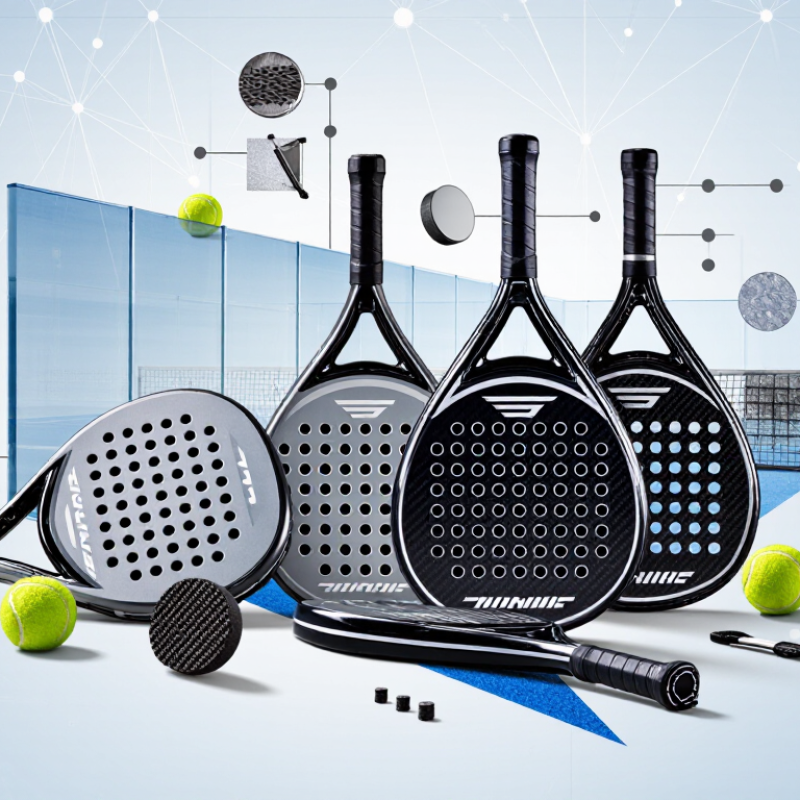
How to Choose Carbon Fibre Padel Rackets?
Carbon fibre grades can make racket descriptions confusing. A 3K weave contains roughly 3,000 filaments per tow. A 12K weave uses about 12,000, while 18K uses about 18,000. Higher K does not automatically mean greater strength. It mainly changes the fabric’s appearance, thickness, resin distribution, and handling during manufacture. A tight 3K surface may look refined, but the internal layup matters more than the visible pattern.
Modulus describes stiffness, measured in gigapascals. Carbon fibres around 230–300 GPa usually offer a balanced response, useful for players wanting comfort and predictable control. Fibres near 400–600 GPa feel stiffer and transfer energy quickly, but they can reduce forgiveness on off-centre hits. High-modulus carbon is not always better for padel. The foam core, fibre orientation, number of layers, and frame design strongly influence the final feel. Do not judge the racket from one number.
I have tested rackets with impressive carbon labels that felt dull in play. The problem was probably the layup, not the fibre grade. A very stiff face can make a fast volley feel sharp, yet mishits may travel harshly through the handle. Players with developing technique may benefit from moderate modulus and a carefully engineered multi-layer structure. Ask whether the stated modulus refers to raw fibre or the finished composite. That distinction is easy to miss.
Choosing a carbon fibre padel racket starts with accurate dimensions, not marketing claims. Under International Padel Federation regulations, the racket must not exceed 45.5 centimetres in length, 26 centimetres in width, or 38 millimetres in thickness. Measure the frame, not only the striking surface. A protective edge guard can change the result.
The 38-millimetre limit matters during fast exchanges. A thicker-looking profile may suggest power, but it cannot legally exceed the permitted thickness. I use a ruler and caliper before serious play. Small differences are easy to miss. They still matter.
The 2024 Global Padel Report from Playtomic and the International Padel Federation recorded more than 50,000 courts worldwide, showing why consistent equipment standards are increasingly important.
A regulation-sized racket also fits more predictably through compact defensive movements. Carbon fibre can provide a firm response, but construction quality, balance, and vibration control deserve equal attention. Do not trust carbon fibre alone. A lighter racket may improve reaction speed, while a head-heavy design can support overhead shots but tire the wrist. My own judgment is not perfect; comfort can feel convincing for ten minutes and disappointing after a full match. Check the dimensions, test the balance, and reconsider any racket that feels powerful only because it is difficult to control.
How to Choose Carbon Fibre Padel Rackets?
Choose Racket Weight: Compare the Common 345–375 g Performance Range
A carbon fibre padel racket usually sits between 345 and 375 grams. This range rewards different playing habits. Lighter models, around 345–355 g, move quickly during volleys and defensive blocks. They can also reduce fatigue during long matches. Heavier rackets, around 365–375 g, add stability and power near the net. However, the extra mass can slow reactions. Feel the difference.
The Playtomic-Deloitte Global Padel Report 2024 recorded more than 5.5 million players worldwide. This growth brings wider differences in fitness, technique, and match duration. Weight should therefore match your real playing conditions, not only your strength. A practical test is simple: hold the racket for ten minutes, then practise repeated overhead swings. Check for wrist tension, late contact, or shoulder fatigue. Remember, an overgrip and protector can add several grams. That changes the balance noticeably. The International Padel Federation’s technical regulations focus on racket dimensions and construction, not one perfect playing weight. This matters. Industry data cannot replace personal testing.
For many intermediate players, 355–365 g offers a sensible compromise. Strong attackers may prefer 365–375 g, while beginners often benefit from 345–355 g. Yet this advice is not absolute. A head-heavy 350 g racket may feel slower than a balanced 365 g model. Measure the finished racket, not the advertised frame alone. A kitchen scale is imperfect, but useful. Test before committing.
Choosing a carbon fibre padel racket starts with the core, not the glossy surface.
EVA foam usually feels firmer, faster, and more precise during aggressive volleys. It can also transmit more vibration through the handle. FOAM feels softer and more forgiving, especially when defending near the back glass. However, softness may reduce the crisp response some advanced players expect. Core density varies between rackets, so material names alone cannot predict performance.
Shape changes balance and sweet-spot placement.
A diamond profile moves weight toward the head, helping powerful smashes and high volleys. It demands accurate timing. A teardrop profile offers a middle ground, combining manageable control with useful attacking power. Round rackets place more weight near the handle and usually provide the largest, most forgiving sweet spot. They suit players who value placement, returns, and steady defensive play.
Your playing habits should guide the pairing. A firm EVA core with a diamond shape can feel harsh if your swing is short or late. A softer FOAM core with a round shape may feel comfortable, but some players find it less lively.
I once chose a high-balance racket for extra power and regretted it after long matches; my shoulder tired quickly.
Test several rackets with identical swings, especially at the net and after glass rebounds. Grip size, surface texture, and total weight also matter. Carbon fibre does not automatically make one choice superior.
How to Choose Carbon Fibre Padel Rackets?
Carbon fibre can make a padel racket stiff, responsive, and durable. However, the material alone does not decide performance. The sweet spot, balance point, and surface texture often shape your real experience on court. During testing, I noticed that a larger sweet spot forgave late contact near the frame. That forgiveness matters during fast exchanges. A smaller sweet spot may feel sharper, but it demands cleaner timing.
Balance point changes how the racket moves through each shot. A head-heavy design can add weight to overheads and powerful smashes. It may also tire your wrist during a long match. A lower balance point feels quicker at the net and supports defensive blocks. I once chose a powerful racket too quickly. My smashes improved slightly, but my volleys became slower. That decision was not completely sensible.
Surface texture can help the ball grip during slices and topspin shots. Rough finishes may increase confidence on lobs, kick smashes, and controlled serves. Still, texture cannot replace correct technique or solid contact. Some surfaces lose their effect after repeated use. Check the texture under strong light. Compare the racket’s listed balance with a physical test, because measurements can vary slightly. Test several shots, not only one impressive smash. A coach or qualified racket specialist can assess your swing speed, wrist comfort, and contact position. You should also notice small warning signs, such as elbow strain or delayed recovery between shots.
3K means one tow contains roughly 3,000 carbon filaments. It often creates a fine, detailed surface pattern. The weave alone does not determine racket strength.
Not automatically. Higher K mainly changes fabric thickness, appearance, resin distribution, and manufacturing behaviour. Internal fibre orientation matters more.
Modulus measures stiffness in gigapascals. A 230–300 GPa fibre usually feels balanced and predictable. A 400–600 GPa fibre feels stiffer and transfers energy faster.
No. High modulus can make volleys feel sharp, but off-centre shots may feel harsh. Developing players may prefer moderate modulus and greater forgiveness.
Check the foam core, fibre direction, layer count, and frame design. Ask whether the modulus describes raw fibre or finished composite. That distinction matters.
Many intermediate players may suit a finished weight around 355–365 grams. It can balance movement, stability, and power. Personal testing still matters more than this range.
Often, 345–355 grams feels easier during quick volleys and defensive blocks. Lighter weight may also reduce fatigue. A head-heavy model can still feel slow.
Hold the racket for ten minutes, then practise repeated overhead swings. Notice wrist tension, late contact, and shoulder fatigue. Do not rush this test.
Yes. An overgrip and protector can add several grams. That extra weight may move the balance toward the head. Measure the finished racket, not only the frame.
Heavier rackets can add stability and power near the net. They may also slow reactions. I once trusted the label too much; the actual swing feel mattered more.
Choosing Carbon Fibre Padel Rackets requires more than selecting the highest carbon number. Carbon grades such as 3K, 12K, and 18K affect the racket’s feel, stiffness, and durability, while carbon moduli from approximately 230 to 600 GPa indicate different performance characteristics. Always check that the racket complies with standard padel dimensions: no more than 45.5 cm in length, 26 cm in width, and 38 mm in thickness.
Weight is another important consideration, with many performance rackets ranging from 345 to 375 g. Select a core material, such as EVA or FOAM, according to your preferred balance of comfort, speed, and power. Diamond, teardrop, and round shapes offer different combinations of attacking ability and control. Finally, evaluate the sweet spot, balance point, and surface texture. A larger sweet spot and lower balance generally improve control, while a higher balance and textured surface can support stronger attacking shots and added spin.